
MENTAL HEALTH
Mind the Gap: Inside New York City’s Mental Health Crisis
BY BRUCE COLLINS
August 2026
Nearly a million New Yorkers cannot access the mental health care they need. A broken workforce, a fraying safety net, and deep inequities are forcing the nation’s largest city to reimagine how — and for whom — mental health care is delivered.
THE EMERGENCY ROOM AT MIDNIGHT
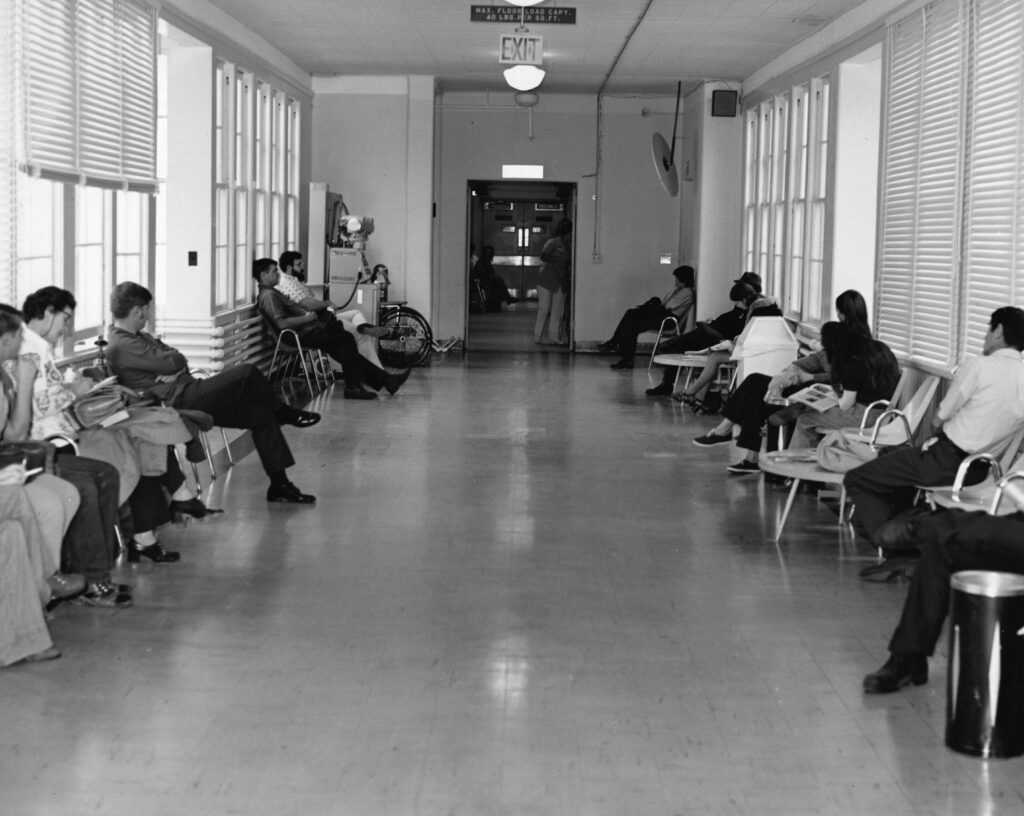
The fluorescent lights in the psychiatric wing do not distinguish between midnight and noon. They simply burn — flat, indifferent — over a row of molded plastic chairs that have not emptied for as long as the triage nurse on duty can remember. On a Tuesday evening in January, the waiting area at one of New York City’s large public hospital psychiatric emergency units holds seventeen people. Some slump against the walls. Others sit rigidly upright, staring at nothing. A young man in a hoodie rocks forward and back with a slow, metronomic persistence. A woman in her sixties speaks quietly but urgently to a person who is not there.
The staff — two nurses, a social worker, and a physician’s assistant — move through the room with the contained urgency of people doing three jobs at once. The attending psychiatrist is managing two simultaneous evaluations behind a closed door. A bed will not become available for hours, possibly not until morning. The seventeen people in the chairs are not admitted. They are not yet refused. They are waiting — and waiting, in the New York City public mental health system, has become a condition of its own.
This scene, searing in its particularity, is not exceptional. It plays out nightly across the city’s Comprehensive Psychiatric Emergency Programs, in the hallways of Bellevue and Kings County and Elmhurst, in the boroughs where the nearest outpatient clinic has a months-long waitlist and the nearest child psychiatrist is in a zip code most families cannot reach. It is, in every measurable sense, the norm. New York City — the wealthiest, most densely resourced metropolis in the United States — is in the middle of a mental health crisis that is at once massive in scale, unequal in its burdens, and stubbornly resistant to easy remedy. Understanding how the city arrived here, and where it might be going, requires reckoning honestly with the gap between what the system promises and what it delivers.
THE SCOPE OF UNMET NEED
The numbers, when assembled, are staggering — and they come not from advocacy groups with an interest in dramatization but from the city’s own health bureaucracy. According to a May 2025 report from the New York City Department of Health and Mental Hygiene, approximately 945,000 adult New Yorkers — roughly 14 percent of the adult population — reported an unmet need for mental health treatment in the preceding year.[1] That figure, already vast, understates the challenge when examined against a more targeted population: among adults who have actually been diagnosed with a mental illness, 34 percent reported an unmet need for treatment in 2023.[2] Put another way, more than one in three New Yorkers who already know they have a mental health condition could not get the care they needed.
The same data offer a partial corrective: 70 percent of adults with a diagnosed mental illness did receive treatment in 2023, a figure the city’s officials point to with some pride.[2] But the remaining 30 percent — left without care despite a formal diagnosis — represent tens of thousands of individuals cycling through crises, losing employment, straining families, and, too often, ending up in emergency rooms that are themselves operating at the edge of capacity.
The geography of that unmet need is not random. The highest-poverty neighborhoods in New York City experience nearly three times as many psychiatric hospitalizations per capita as the lowest-poverty neighborhoods — a disparity that reflects not a higher incidence of mental illness in poor communities alone, but the structural absence of earlier, less acute points of intervention.[2] When outpatient care is unavailable, inaccessible, or unaffordable, psychiatric emergencies become the default mode of treatment. The emergency room becomes the clinic.
Among the adults who reported unmet needs, the barriers are layered and compounding. More than half — 57 percent — identified multiple barriers to care simultaneously; 15 percent described four or more distinct obstacles standing between them and a provider.[1] The barriers themselves span the practical and the psychological: cost and lack of insurance coverage, not knowing where to seek help, stigma, inconvenient hours that conflict with work schedules, and difficulty navigating telehealth platforms. Each barrier is addressable in isolation. Together, they form a wall.
THE WORKFORCE CRISIS
Behind every unmet appointment is a missing clinician. The workforce shortage driving New York City’s mental health crisis is not a new problem, but in the years following the pandemic it has metastasized into something that the system’s own architects now describe in terms of emergency. The NYC Health Department’s own payroll reflects the magnitude: in fiscal year 2024, full-time mental health roles across the department carried a vacancy rate of 40 percent.[3][9] Four in ten positions, budgeted and authorized, simply unfilled.
The problem extends far beyond city government. Nonprofit human service organizations — which deliver the bulk of community-based mental health services in New York — report average vacancy rates of 15.6 percent across their workforces, with specific clinical roles running far higher.[4] Case managers, crisis counselors, and social workers — the practitioners most likely to encounter people before a condition escalates to emergency status — are among the hardest positions to fill and retain, with vacancy rates at some organizations reaching 30 to 45 percent.[4] The result is a system that is structurally understaffed at precisely the points where early intervention could prevent downstream crisis.
The practitioners who remain describe working conditions that are themselves corrosive. Burnout, secondary traumatic stress, and what clinicians increasingly term moral injury — the particular anguish of knowing what patients need and being unable to provide it — are pushing experienced professionals toward the exits. The private sector, which offers higher salaries and less acute caseloads, absorbs many of them. Those who stay in the public system carry caseloads inflated by the vacancies around them. Their patients wait longer. Their appointments grow shorter. And some of those patients, receiving insufficient care, return to emergency rooms.
There are signs that targeted intervention can reverse the cycle. NYC Health + Hospitals — the city’s public hospital system — reported its lowest behavioral health staff turnover rate in recent history in 2025, at 8 percent, down from nearly 18 percent in 2022, following the implementation of dedicated recruitment and retention programs.[5] The lesson — that investment in workforce stability produces measurable results — has not yet been applied uniformly across the system. Looking ahead, the city’s behavioral health workforce is projected to number more than 100,000 practitioners by 2030, a figure that speaks to ambition but also to the scale of the transformation required to reach it.[3]
RACING TO CLOSE THE GAP: CRISIS RESPONSE SYSTEMS
Against this backdrop of shortage and strain, the city has been building — or attempting to build — a more responsive architecture for crisis intervention. The centerpiece of that effort, in terms of public visibility, is the Behavioral Health Emergency Assistance Response Division, known as B-HEARD: a co-response model that pairs mental health professionals with emergency medical service workers to respond to mental health calls that have historically defaulted to police response alone. The outcomes data, where available, are striking.
| “91% of B-HEARD recipients said the response was more appropriate for their needs than traditional EMS.”— NYC Health + Hospitals, Behavioral Health Blueprint: Second Year of Achievements, 2025 Annual Report |
Beyond the appropriateness finding, 99 percent of B-HEARD recipients reported that they felt treated with courtesy and respect — a data point that carries particular weight given the documented history of mental health crises escalating under law-enforcement-only response frameworks.[5] The program represents a genuine shift in philosophy: the recognition that a person in psychiatric distress is not, by default, a police problem.
NYC Health + Hospitals’ Comprehensive Psychiatric Emergency Programs served 11,400 patients and logged 20,300 crisis visits in 2025 — numbers that illustrate both the reach of the system and the relentlessness of demand.[5] To manage the flow of patients requiring inpatient admission, the system launched a new Behavioral Health Transfer Center, which completed more than 600 patient transfers by December 2025, reducing the wait times that have long been the most visible — and most demoralizing — feature of psychiatric emergency care.[5] At any given moment, the system maintains approximately 1,090 inpatient psychiatric beds, with an average daily census of 950 patients — a utilization rate that leaves little slack for surges.[5]
Outpatient care, the domain where prevention and early intervention are most possible, showed meaningful improvement in the same period: scheduled visits with behavioral health providers increased by 12 percent in 2025 compared to the prior year, and completed visits with individual patients rose by 9 percent.[5] Crisis Follow-up Services — proactive, post-discharge support designed to catch patients before they cycle back into emergency care — are now operational at Bellevue, Elmhurst, Kings County, and Queens hospitals, with expansion planned to Jacobi, Woodhull, and Harlem.[5] Patient satisfaction, too, remains high: 89 percent of patients reported satisfaction with behavioral health care from NYC Health + Hospitals, and 88 percent said they would recommend the services to others.[5] These are not the numbers of a system in collapse. They are the numbers of a system that is improving at the margins while the underlying demand continues to outpace capacity.
THE EQUITY DIVIDE
If the mental health crisis is distributed unequally across income and geography, it is distributed with equal inequity across race, ethnicity, and country of origin. Black, Latinx, and Asian American and Pacific Islander New Yorkers are measurably less likely to be connected to mental health care than their white counterparts — a disparity rooted in a convergence of structural factors that the system has been slow to acknowledge and slower still to address.[2]
The barriers data illuminate the shape of those structural failures. Latino adults were nearly twice as likely as white adults to cite stigma as a barrier to care — 17 percent versus 10 percent — while Asian American and Pacific Islander adults reported stigma barriers at 22 percent, more than double the rate among white respondents.[1] Job-related concerns — fear that seeking mental health care could affect employment status or professional reputation — were reported at higher rates among Latino adults (10 percent) and AAPI adults (12 percent) than among white adults (7 percent).[1] Perhaps most telling, cultural and language mismatch with providers — the sense that the available clinicians do not speak the patient’s language, literally or figuratively — was identified as a barrier by 10 percent of Latino adults and 15 percent of AAPI adults, compared to just 4 percent of white adults.[1] Adults born outside the United States were more likely than U.S.-born adults to cite all three of these barriers simultaneously.
The equity gap is especially acute when the lens turns to children. More than half of all New York City residents — 56.2 percent — reported difficulty accessing mental health care for children between the ages of three and seventeen.[3][10] Among families with at least one foreign-born parent, that figure rises to 64.6 percent; for families whose first language is not English, it climbs to 69.3 percent.[3][10] These numbers describe not a marginal challenge but a systemic failure to serve the majority of the city’s children from immigrant and non-English-speaking households.
The supply-side explanation is not hard to find. Child and adolescent psychiatrists — the specialists most equipped to diagnose and treat the youngest patients — are concentrated overwhelmingly in Manhattan, leaving the outer boroughs, where much of the city’s immigrant and working-class population lives, severely underserved.[3][8] Across New York State, there are an average of only 30 child and adolescent psychiatrists per 100,000 children — a ratio that, even if distributed equitably, would represent a severe shortage.[3][8] In practice, that distribution is anything but equitable.
THE BUDGET BATTLEFIELD
Mapping the problem is one thing. Funding the solutions is another — and here, the picture grows considerably darker. New York City’s Fiscal Year 2026 budget allocates $512.3 million to mental health services, $159.1 million to alcohol and drug use prevention, and $9.5 million to developmental disabilities programming.[6] These are not negligible sums, but they exist within a larger fiscal picture that is moving in the wrong direction.
The Department of Health and Mental Hygiene’s proposed Mental Hygiene budget for FY2026 — $713.7 million in total — is $83.5 million less than the FY2025 adopted budget.[6] The cut arrives at the precise moment that federal American Rescue Plan funds, which propped up mental health programming across the city during and after the COVID-19 pandemic, are expiring. The structural tension this creates is not lost on anyone who works in the system: programs built and staffed on the assumption of temporary federal money are now confronting the prospect of contraction, even as the population they serve continues to grow.
The New York City Council has been pointed in its response. Lawmakers called on the Adams administration to add $183 million in additional mental health funding for FY2026, including appropriations for Mobile Treatment Centers, Mental Health Clubhouses, and Supervised Release Intensive Case Management — programs that serve some of the city’s most vulnerable and hardest-to-reach populations.[7] Most of those requests were not included in the Executive Budget. Mental Health Clubhouses — community centers that provide peer support and structured activity for adults living with serious mental illness — received an additional $4 million for FY2026, but the allocation was explicitly described as a replacement for expiring ARP funds, not a new investment.[6]
The staffing picture is equally sobering. DOHMH’s FY2026 budgeted headcount stands at 591 full-time positions; as of January 2025, the actual headcount was 489, with 194 vacancies unfilled.[6] A department charged with overseeing the mental health of 8.3 million people is operating, by design, with a third of its authorized workforce missing.
WHAT COMES NEXT
The Mayor’s Office of Community Mental Health has, to its credit, approached the crisis with something approaching strategic rigor. Its published roadmap for strengthening the behavioral health workforce envisions a multi-pronged effort: developing clearer career pathways for community health workers and peer support specialists, expanding educational access to clinical training programs, investing in BIPOC-led community organizations that already hold trust in the neighborhoods the formal system struggles to reach, and deploying telehealth as a mechanism to bridge the geography of provider scarcity.[3] B-HEARD is slated for expansion. Supportive housing — the evidence-backed recognition that stable shelter is a precondition of stable mental health — remains a stated priority.[2]
None of this is happening quickly. Systemic reform in a city as large, as complex, and as politically contested as New York moves slowly even when the will to act is genuine — and the will, in this case, is genuinely contested. Advocates who work closest to the crisis point not just to budget numbers but to the structural logic of a system that continues to fund emergency and inpatient care at a far higher rate than community-based prevention, perpetuating the very cycle it claims to want to break.
What the past two years have produced, at minimum, is clarity. The data that the city’s own agencies have assembled — on the scale of unmet need, on the workforce gap, on the equity failures, on the budget shortfalls — constitute an unusually honest accounting of a crisis that was long obscured by fragmentation, underreporting, and institutional defensiveness. New York City now knows, with considerable precision, where the gaps are and who falls through them. Whether the political will and the fiscal commitment required to close those gaps can be sustained — and sustained at the scale the data demand — is the question that will define the next chapter of this crisis. The answer will be written not in reports or roadmaps, but in whether the seventeen people in those plastic chairs, and the hundreds of thousands they represent, finally get somewhere to go.
REFERENCES
- NYC Department of Health and Mental Hygiene. “Barriers to Mental Health Treatment among New York City
Adults, 2023.” NYC Vital Signs, Vol. 22, No. 2. May 2025. - NYC Mayor’s Office of Community Mental Health (OCMH). “2025 Annual Report.” January 2025.
- NYC Mayor’s Office of Community Mental Health (OCMH). “Bridging the Gap: Challenges and Solutions for a
Thriving Behavioral Health Workforce.” White Paper. January 2025. - Center for an Urban Future. Cited in OCMH, Bridging the Gap White Paper, 2025. Original report:
2024. - NYC Health + Hospitals. “Behavioral Health Blueprint: Second Year of Achievements.” 2025 Annual Report.
Published 2026. - NYC City Council, Finance and Health Committees. “Department of Health and Mental Hygiene — Mental
Hygiene: Fiscal 2026 Preliminary Plan Budget Report.” March 2025. - NYC City Council. “Fiscal 2026 Budget Response: Department of Health and Mental Hygiene.” 2025.
- American Academy of Child and Adolescent Psychiatry (AACAP). State data on child and adolescent psychiatrist
supply, 2023. Cited in OCMH, Bridging the Gap White Paper. - NYC Comptroller’s Office. Government Vacancy Report, June 2024. Cited in OCMH, Bridging the Gap
White Paper. - National Survey of Children’s Health, 2022. Cited in OCMH, Bridging the Gap White Paper.
Photo by Navy Medicine on Unsplash